

Midtown, New York City. August 17, 2012
365 Part Deux

365.358 Behind Bars
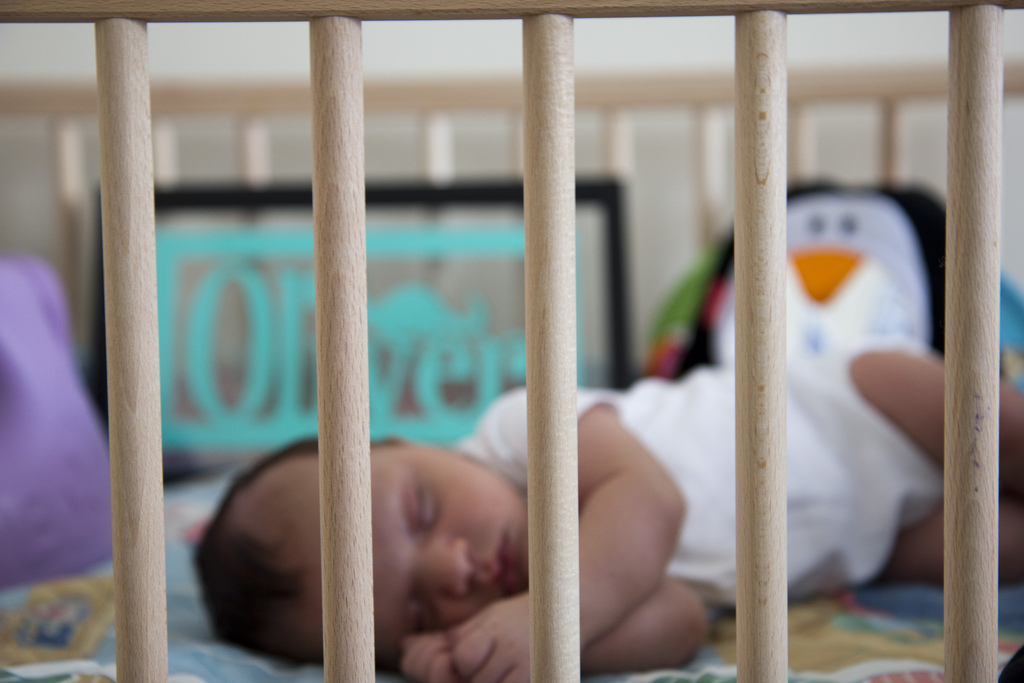
My Apartment, Washington Heights, New York City. August 16, 2012
365 Part Deux

Everyday I’m Vicaring
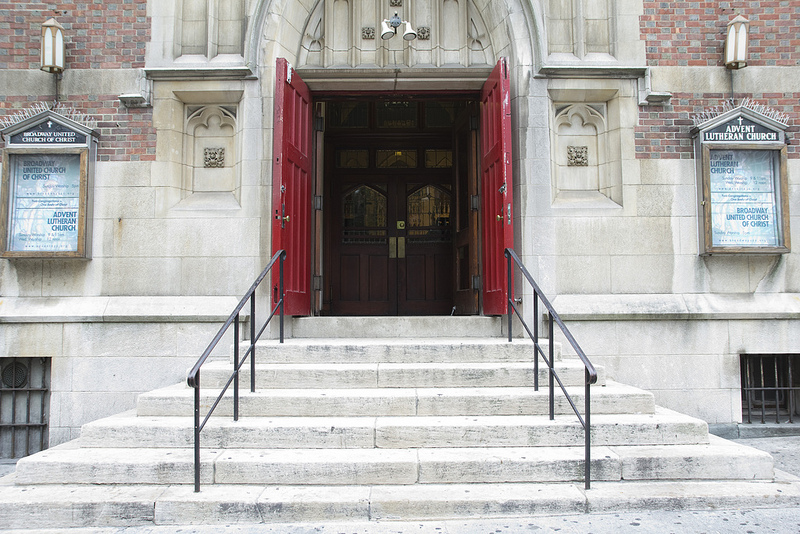 On Sunday, September 2, I started my full year internship at Advent Lutheran Church in Manhattan. I’ve been the field ed/seminarian intern for the last two years but I’m now full time. I don’t have time for a full write up of what’s been happening but I’d like to share some highlights.
- After my sermon on Sunday, I ate pancakes full of cookie dough. My teeth hurt just writing that.
- While wearing my collar on Sunday, and leaving the subway station, I passed by a man begging for money on the street. After he insulted a young couple in front of me (who were ignoring him – the proper NYC response), he saw me, grabbed his throat, and kept saying “father! father!” while locked in a death stare. It was a very weird experience that I didn’t know how to react to.
- I have my own voice mail box now. I’m fancy.
- I’m consider going to a rock show with fellow parishioners to support a member of my congregation rocking out as the drummer in Hannah vs the many as part of my ministry.
- On the ride into the office on my first day, it was very strange to be actually commuting to work with everyone else.
- It’s still weird turning away people who randomly walk into the church and ask for money (which we don’t give out to walk-ins). I had to turn down a family yesterday (while directing them to other local charities and resources that are available to them).
- There’s been a big pile of Dum-dum lollipops that I have been devouring all week.
- Being away from Oliver has been tough.
- I’ve forgotten something vital at home every day this week. Today, I left my coffee on the kitchen counter. WHYYYYY.
- Being a part of bible studies is one of my favorite things about the church.
- The new vicar at Trinity 100th street seems nice.
- And I started out my vicarship with a cold that the whole family is now enjoying. Oliver’s coughs and sneezes are adorable, and sad, at the same time.
This is going to be fun.

365.357 Which one is the cat and which one is the baby?
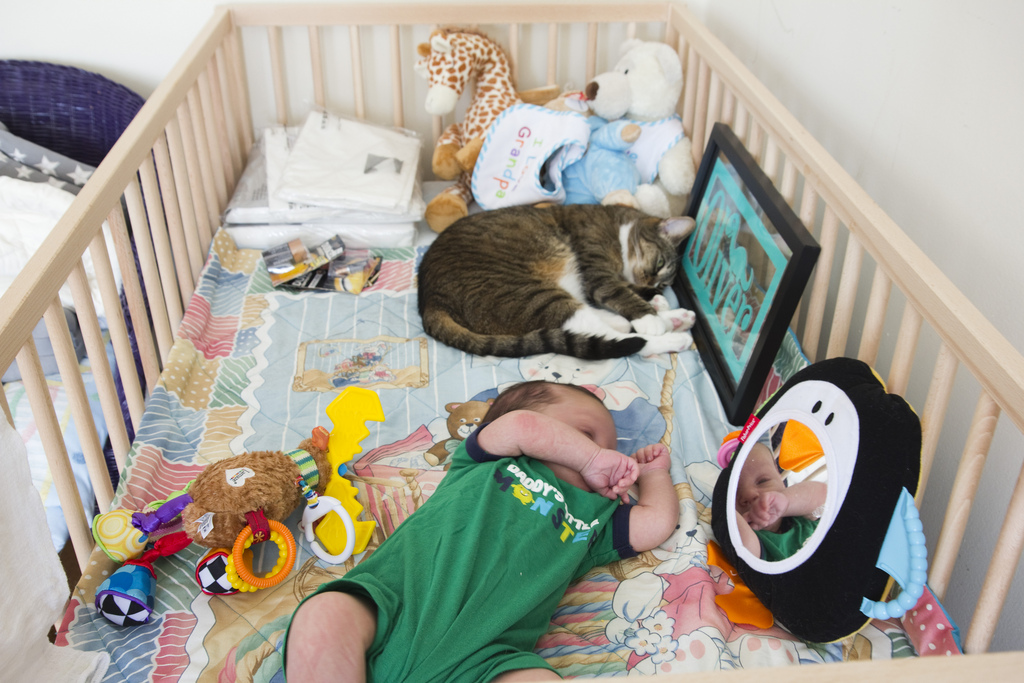
My Apartment, Washington Heights, New York City. August 15, 2012
365 Part Deux

365.356 Large and in charge.

My Apartment, Washington Heights, New York City. August 14, 2012
365 Part Deux
My working title was “50 Shades of Solomon”
My sermon on Songs of Songs 2:8-13 delivered at Advent Lutheran Church, NYC, on September 2, 2012. I’m not 100% sure of the theological consequences and implications of what I conveyed here – I know that some folks were didn’t like my use of the word “trapped” (and for good reason since Lutheran tradition ties that word to our being trapped in sin and freed through grace) so I’ve still gotta work out exactly how this all fits but I think I did alright. My problems from last Sunday didn’t show up (and I still even got compliments even on the sermon I thought I bombed) so I’m doing alright. Not a bad way to start an Internship I think.
************
I think it’s fitting that we’re ending our time in the Davidic storyline with a song. I mean – our reading today from Song of Solomon is a tad out of the ordinary. There’s no real plot here – there’s no historical story….it isn’t even a complete story. There’s no beginning, or middle, or end. Instead – we’re hearing a part of a song but not just any song – we’re hearing a love song – if you will – it sounds like a pop rock song.
When I read Song of Solomon, I hear a pop song. There’s nothing in the text that really makes it historical – there’s no dates, or battles, or culture references that scream that this text was written in a specific time by a specific person in a specific place. Instead…well…it sounds like something you’d hear on the radio, or Pandora, or something you might see a young guy in skinny jeans singing in a basement in the Village.
But it’s not a perfect pop song. I mean – there’s loss, and lust, and love and that whole teenage puppy thing – but – there’s no heart break. There’s no story about how the two lovers in our story meet. There’s no jealous ex or a missed subway connection or anything that interrupts their love for each other. And there’s also no end – we don’t hear if they live happily ever after or if they never see each other again. Instead – we just get a story of two lovers in love. Sure, they long to be with each other – and there are some scenes of absences and other problem – but they’re just two kids trapped in the moment of love.
And it can be kinda disgusting too. I mean – it reads like they are in the honeymoon phase of their love affair. They can’t get enough of each other, they want to be around each other – I can almost imagine them saying “oh yeah, we never fight – we’re just in looovveeeee” with those puppy dog eyes And those of us who have been in relationships will just roll our eyes and say – just wait – it will get tougher. It will get worse. Just wait until you have a real disagreement – a real problem – and just you wait to see how much in looovvveee you’ll really be.
But that’s not what we get here. In the middle of our Bible – we’re stuck with a puppy dog love song, frozen for all time. The two lovers never fall in love – they never fall out love – they never get their dreams for marriage fulfilled. They’re frozen, forever, saying to each other that “the winter is past….the flowers appear on the earth, the time of singing has come…arise, my love, my fair one, and come away.” They are trapped….in love…a love that is mutually shared – that just is. There’s no need to explain where it comes from – just that it exists, is real, and it feeds them. It nourishes them in time of togetherness and in times of absence. They are frozen in relationship with each other – for all time. They can’t get out of it, they can’t change it, there’s no death or marriage or ex-girlfriend coming into the picture to ruin the fun – they are frozen in a love story that they did not start but that they will be apart of forever. And that’s why I think it’s brilliant that Song of Solomon is in our bibles – because these two lovers are just in love – it just is! They can’t do anything about it. And that story – I think that’s our story too.
Last week, when we read about Solomon’s dedication of the temple – I said that I thought it focused us down – it focused our attention to how concrete God is – and that God – God is all around – and we’re trapped – just trapped – in God’s presence, whether we know it or not. Our existence with God just is. And I want to extend that here to also claim that we’re also placed into a relationship with God – a relationship that we didn’t start – there’s no boy meets next door neighbor story here – the relationship we have with God just is. We’re stuck there – like these two lovers – in a situation that we did not create on our own. We’re just plopped right into it – that there is this God – this God – all around us and that this God isn’t just a wall or some kind of abstract midst or something that doesn’t actually mean anything to us – no – we’re plopped right into the middle of being in a relationship with God – a relationship founded on the thing that God knows how to do – and that is love. Whether we know it or not, whether we feel it, whether we think we can choose to belong to God or not – that’s just where we are. Through the Christ event – with the breaking of God into our world, into our existence, into our fears, suffering, joy, laughter, and tears – through the ultimate symbol of isolation, loneliness, apartness – the bipolar counterpoint to love – through the Cross, we discover that we are smack dab in the middle of a relationship of love – even when we don’t feel it, even when we’re not aware of it – even when we do everything we can to fight against it. We’re there – we’re just where love is.
So now what? What do we do since we’re stuck in love?
I think…well..I think we need to acknowledge there are consequences for being stuck in love. I mean, we’re so wrapped up in this one on one relationship – we’re in this little world – and…and we’re so wrapped up in it that we end up outside of it. I mean – in our reading – the only words that can be used to described the beloved is as a gazelle or a young stud. The only proper description is a metaphor – a metaphor that points out there – into the world – away from the two lovers and into the wider area where they live. But not only that – their love has changed the season – the winter is past – the time of flowers has come – their love can’t be contained by just themselves. It can’t be limited to just their experience of it. It has no choice but to radiate outwards – to go beyond them – to enter the entire world and engage the world as a couple in love. They can’t help it. They have no other response in them. They can only go out there and love.
That’s the only thing that’s left to do.
So what does that mean? I think our reading from James might be a start – be quick to listen, slow to speak, slow to anger. That’s not too bad. And that whole bit about being doers of the word – that action and listening are experiences that are tied together – I like that. And Jesus, in our reading from Mark – don’t commit murder, don’t slander, watch out for pride and folly – all good things. That’s all a good start. But it isn’t the limit to love. It isn’t a checklist to what love is. I couldn’t give you a chart after service today that says do these things, check them off the list, and you would have shown all that love can do. Because love isn’t a series of acts – it isn’t something you can check off and pat yourself on the back. Like the lovers in Song of Solomon – it is an all encompassing experience that we are trapped in. They can do nothing but love – and that’s are call – in all things, with all things, in all our relationships – we are called to love. We are called to love from our relationship with God to all that is outside us. We’re called to love all those who share are beliefs and all those who don’t. We’re called to love all those who agree with us politically and those who don’t. We’re called to love all those who look like us and those who don’t. We’re called to act like we are in the relationship of love that we are in. Now….this isn’t easy. The lovers in our story are trapped in a love story that is filled with absence – filled with distance – filled with trials and tribulations and people who don’t want that relationship to continue – but…but those lovers can only do one thing….and that’s to love. This brings to mind my experience of this political season – when it seems that divisiveness and the breaking of the bonds we share together is the goal – when love takes a back seat to an empty chair – but…we’re called to be something else. We’re called to be in the midst of love – not…not because we somehow deserve it or that we’re better than everyone else or that we’re special and wonderful people who never feel heartache, fear, and stress. No…we’re called to dwell in love -to be people in love in the world around us – because we were loved first and…well…like our lovers from the Song of Solomon shows us – when you’re in love…is there anything but love that makes sense to do?
Amen.

365.355 Burp clothes, Wash Clothes, and Ziplock bags, O my.

My Apartment, Washington Heights, New York City. August 13, 2012
365 Part Deux

365.354 Oliver and mom at Advent. Back row representin’
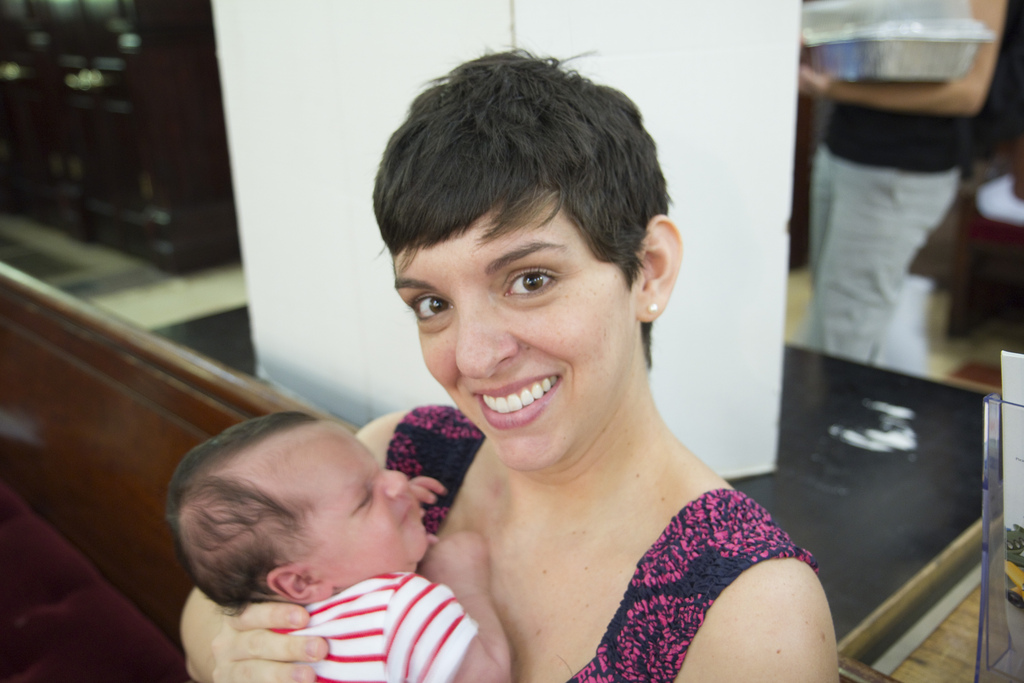
Advent Lutheran Church, Upper West Side, New York City. August 12, 2012
365 Part Deux

365.353 Twinkie has no idea what I’m doing.

My Apartment, Washington Heights, New York City. August 11, 2012
365 Part Deux