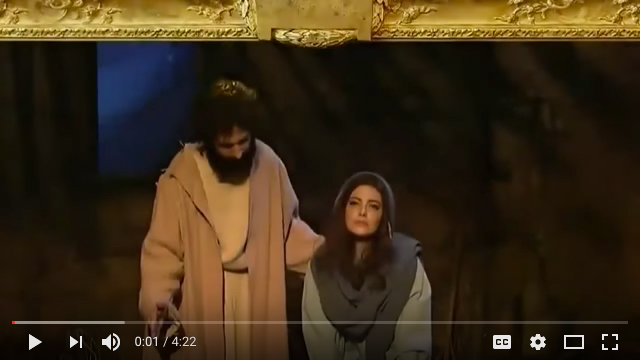
New Eyes: What God gives the community

When I came to you, brothers and sisters, I did not come proclaiming the mystery of God to you in lofty words or wisdom. For I decided to know nothing among you except Jesus Christ, and him crucified. And I came to you in weakness and in fear and in much trembling. My speech and my proclamation were not with plausible words of wisdom, but with a demonstration of the Spirit and of power, so that your faith might rest not on human wisdom but on the power of God.

Yet among the mature we do speak wisdom, though it is not a wisdom of this age or of the rulers of this age, who are doomed to perish. But we speak God’s wisdom, secret and hidden, which God decreed before the ages for our glory. None of the rulers of this age understood this; for if they had, they would not have crucified the Lord of glory. But, as it is written, “What no eye has seen, nor ear heard, nor the human heart conceived, what God has prepared for those who love him”— these things God has revealed to us through the Spirit; for the Spirit searches everything, even the depths of God. For what human being knows what is truly human except the human spirit that is within? So also no one comprehends what is truly God’s except the Spirit of God. Now we have received not the spirit of the world, but the Spirit that is from God, so that we may understand the gifts bestowed on us by God. And we speak of these things in words not taught by human wisdom but taught by the Spirit, interpreting spiritual things to those who are spiritual. Those who are unspiritual do not receive the gifts of God’s Spirit, for they are foolishness to them, and they are unable to understand them because they are spiritually discerned. Those who are spiritual discern all things, and they are themselves subject to no one else’s scrutiny. “For who has known the mind of the Lord so as to instruct him?” But we have the mind of Christ.

1 Corinthians 2:1-16

My sermon from 5th Sunday after Epiphany (February 5, 2017) on 1 Corinthians 2:1-16.

Play

Puzzle Piece: Preached at Camp Koinonia, Annual Congregation Retreat

For the message about the cross is foolishness to those who are perishing, but to us who are being saved it is the power of God. For it is written, “I will destroy the wisdom of the wise, and the discernment of the discerning I will thwart.” Where is the one who is wise? Where is the scribe? Where is the debater of this age? Has not God made foolish the wisdom of the world? For since, in the wisdom of God, the world did not know God through wisdom, God decided, through the foolishness of our proclamation, to save those who believe. For Jews demand signs and Greeks desire wisdom, but we proclaim Christ crucified, a stumbling block to Jews and foolishness to Gentiles, but to those who are the called, both Jews and Greeks, Christ the power of God and the wisdom of God. For God’s foolishness is wiser than human wisdom, and God’s weakness is stronger than human strength. Consider your own call, brothers and sisters: not many of you were wise by human standards, not many were powerful, not many were of noble birth. But God chose what is foolish in the world to shame the wise; God chose what is weak in the world to shame the strong; God chose what is low and despised in the world, things that are not, to reduce to nothing things that are, so that no one might boast in the presence of God. He is the source of your life in Christ Jesus, who became for us wisdom from God, and righteousness and sanctification and redemption, in order that, as it is written, “Let the one who boasts, boast in the Lord.”

1 Corinthians 1:18-31

My sermon from 4th Sunday after Epiphany (January 29, 2017) on 1 Corinthians 1:18-31.

Play

Perishing: Take Off the Jacket

Now I appeal to you, brothers and sisters, by the name of our Lord Jesus Christ, that all of you should be in agreement and that there should be no divisions among you, but that you should be united in the same mind and the same purpose. For it has been reported to me by Chloe’s people that there are quarrels among you, my brothers and sisters. What I mean is that each of you says, ‘I belong to Paul’, or ‘I belong to Apollos’, or ‘I belong to Cephas’, or ‘I belong to Christ.’ Has Christ been divided? Was Paul crucified for you? Or were you baptized in the name of Paul? I thank God that I baptized none of you except Crispus and Gaius, so that no one can say that you were baptized in my name. (I did baptize also the household of Stephanas; beyond that, I do not know whether I baptized anyone else.) For Christ did not send me to baptize but to proclaim the gospel, and not with eloquent wisdom, so that the cross of Christ might not be emptied of its power. For the message about the cross is foolishness to those who are perishing, but to us who are being saved it is the power of God.

1 Corinthians 1:10-18

My sermon from 3rd Sunday after Epiphany (January 22, 2017) on 1 Corinthians 1:10-18.

Play

Greeting: What Paul’s Corinth was Like

Paul, called to be an apostle of Christ Jesus by the will of God, and our brother Sosthenes, To the church of God that is in Corinth, to those who are sanctified in Christ Jesus, called to be saints, together with all those who in every place call on the name of our Lord Jesus Christ, both their Lord and ours: Grace to you and peace from God our Father and the Lord Jesus Christ. I give thanks to my God always for you because of the grace of God that has been given you in Christ Jesus, for in every way you have been enriched in him, in speech and knowledge of every kind— just as the testimony of Christ has been strengthened among you— so that you are not lacking in any spiritual gift as you wait for the revealing of our Lord Jesus Christ. He will also strengthen you to the end, so that you may be blameless on the day of our Lord Jesus Christ. God is faithful; by him you were called into the fellowship of his Son, Jesus Christ our Lord.

1 Corinthians 1:1-9

My sermon from 2nd Sunday after Epiphany (January 15, 2017) on 1 Corinthians 1:1-9.

Play

What’s in a name? A sermon on Jesus’ name day.

When the angels had left them and gone into heaven, the shepherds said to one another, “Let us go now to Bethlehem and see this thing that has taken place, which the Lord has made known to us.” So they went with haste and found Mary and Joseph, and the child lying in the manger. When they saw this, they made known what had been told them about this child; and all who heard it were amazed at what the shepherds told them. But Mary treasured all these words and pondered them in her heart. The shepherds returned, glorifying and praising God for all they had heard and seen, as it had been told them.

After eight days had passed, it was time to circumcise the child; and he was called Jesus, the name given by the angel before he was conceived in the womb.

Luke 2:15-21

My sermon from New Year’s Day (January 1, 2017) on Luke 2:15-21.

Play

Would God be Born: When does Christmas show up?

In those days a decree went out from Emperor Augustus that all the world should be registered. This was the first registration and was taken while Quirinius was governor of Syria. All went to their own towns to be registered. Joseph also went from the town of Nazareth in Galilee to Judea, to the city of David called Bethlehem, because he was descended from the house and family of David. He went to be registered with Mary, to whom he was engaged and who was expecting a child. While they were there, the time came for her to deliver her child. And she gave birth to her firstborn son and wrapped him in bands of cloth, and laid him in a manger, because there was no place for them in the inn.

In that region there were shepherds living in the fields, keeping watch over their flock by night. Then an angel of the Lord stood before them, and the glory of the Lord shone around them, and they were terrified. But the angel said to them, “Do not be afraid; for see—I am bringing you good news of great joy for all the people: to you is born this day in the city of David a Savior, who is the Messiah, the Lord. This will be a sign for you: you will find a child wrapped in bands of cloth and lying in a manger.” And suddenly there was with the angel a multitude of the heavenly host, praising God and saying, “Glory to God in the highest heaven, and on earth peace among those whom he favors!” When the angels had left them and gone into heaven, the shepherds said to one another, “Let us go now to Bethlehem and see this thing that has taken place, which the Lord has made known to us.” So they went with haste and found Mary and Joseph, and the child lying in the manger. When they saw this, they made known what had been told them about this child; and all who heard it were amazed at what the shepherds told them. But Mary treasured all these words and pondered them in her heart. The shepherds returned, glorifying and praising God for all they had heard and seen, as it had been told them.

Luke 2:1-20

My sermon from Christmas Eve (December 25, 2016) on Luke 2:1-20.

Play

Unregistered Hope: Slow tv and the Sacred Everyday

In those days a decree went out from Emperor Augustus that all the world should be registered. This was the first registration and was taken while Quirinius was governor of Syria. All went to their own towns to be registered. Joseph also went from the town of Nazareth in Galilee to Judea, to the city of David called Bethlehem, because he was descended from the house and family of David. He went to be registered with Mary, to whom he was engaged and who was expecting a child. While they were there, the time came for her to deliver her child. And she gave birth to her firstborn son and wrapped him in bands of cloth, and laid him in a manger, because there was no place for them in the inn.

In that region there were shepherds living in the fields, keeping watch over their flock by night. Then an angel of the Lord stood before them, and the glory of the Lord shone around them, and they were terrified. But the angel said to them, “Do not be afraid; for see—I am bringing you good news of great joy for all the people: to you is born this day in the city of David a Savior, who is the Messiah, the Lord. This will be a sign for you: you will find a child wrapped in bands of cloth and lying in a manger.” And suddenly there was with the angel a multitude of the heavenly host, praising God and saying, “Glory to God in the highest heaven, and on earth peace among those whom he favors!” When the angels had left them and gone into heaven, the shepherds said to one another, “Let us go now to Bethlehem and see this thing that has taken place, which the Lord has made known to us.” So they went with haste and found Mary and Joseph, and the child lying in the manger. When they saw this, they made known what had been told them about this child; and all who heard it were amazed at what the shepherds told them. But Mary treasured all these words and pondered them in her heart. The shepherds returned, glorifying and praising God for all they had heard and seen, as it had been told them.

Luke 2:1-20

My sermon from Christmas Eve (December 24, 2016) on Luke 2:1-20.

Play

Found to Be: Joseph (Jesus’ Dad) and Silence

18 Now the birth of Jesus the Messiah took place in this way. When his mother Mary had been engaged to Joseph, but before they lived together, she was found to be pregnant from the Holy Spirit. 19 Her husband Joseph, being a righteous man and unwilling to expose her to public disgrace, planned to divorce her quietly. 20 But just when he had resolved to do this, an angel of the Lord appeared to him in a dream and said, “Joseph, son of David, do not be afraid to take Mary as your wife, for the child conceived in her is from the Holy Spirit. 21 She will bear a son, and you are to name him Jesus, for he will save his people from their sins.” 22 All this took place to fulfill what had been spoken by the Lord through the prophet:

23 “Look, the virgin shall become pregnant and give birth to a son,
and they shall name him Emmanuel,”
which means, “God is with us.”

24 When Joseph awoke from sleep, he did as the angel of the Lord commanded him; he took her as his wife 25 but had no marital relations with her until she had given birth to a son, and he named him Jesus.

Matthew 1:18-25 (NRSVue)

My sermon from the Fourth Sunday of Advent (December 18, 2016) on Matthew 1:18-25.

******

Is anyone here watching the tv show Crazy Ex-Girlfriend? The show tells the story of a young woman named Rebecca who gives up her life in New York City at an awesome law firm to head west, to West Covina, California, to hopefully find love with an old boyfriend she first met at summer camp. The show is full of drama, wacky situations, adult themes, and also…songs. Each episode has at least one character expressing their inner thoughts through song and dance. Even the opening credits are a musical number with a very 1920s feel with backup dancers resembling the Rockettes and a bouncy, uplifting tune that masks the trouble and drama Rebecca brings to her world. Now my favorite part of the opening credits is at the very end. The backup dancers are holding these giant cutout hearts. The camera is looking down at the dance team and we watch as the dancers move closer and closer, using their multiple hearts to form one giant heart…with the face of Rebecca’s old boyfriend in the middle. And then, out of the blue, Rebecca’s own face bursts through with a Blam! And then there’s silence for several uncomfortable moments. We just sit there, watching Rebecca’s face smile….and just when we think the credits should end and we should be at our first commercial break, we’re still there staring at her face. The silence lasts a little too long. It makes us, the viewers, feel uncomfortable. The whole thing is totally awkward…and we wonder if maybe our tvs froze up.

Silence…can be all sorts of things. It can be a blessing, like standing in our front lawns in the middle of a light snowfall before the snow plows and snow blowers disturb the suburban air. Silence can also be a source of horror, like the unnatural silence of shell shocked children that we see in videos documenting the obliteration of Eastern Aleppo in Syria. Silence is heavy and the heavier we’re in it, the more I want to break it, the more I want to fill that terrifying or joyous or peaceful or awkward moment with any kind of sound. And that’s an urge I felt while reading this passage from Matthew because, in today’s story, Joseph never says a word. Angels speak, his fiancee is pregnant, and he plans to breakup with her – there’s a lot going on here – but, through it all, Joseph is silent. The gospel according to Matthew doesn’t record Joseph ever saying a single word. The world is about to change. God is doing a brand new thing. And..through it all…there’s just….silence.

And that’s a bit awkward. So what do we do with that silence? Maybe we try to fill it in [like that skit from Saturday Night Live that aired two weeks ago. Emma Stone is Mary and, well, Mary is tired after giving birth. Visitors keep coming and Joseph keeps letting them in.] [Like in the SNL skit we saw today.] Joseph’s silence lets us expand their story. Since he says nothing, we give him words to say and emotions to experience. Joseph is our blank slate, inviting us to enter the story and be there when Joseph sees Mary pregnant for the first time, or when a dream tells him who Jesus will be, or when another dream, later on, tells him to gather Mary and Jesus and head to Egypt as a family of refugees escaping a rampaging King Herod. Joseph’s wordless experience of his story lets us put our words on his lips and, for a moment, play in the Christmas story.

Giving Joseph these kinds of words is something we should do. Scripture’s not just words on a page. Scripture is a story we are invited to experience over and over again. When we enter into Christ’s story, we experience God. But scripture also gives us space to not always rush into the story that is told. Because what would happen if we let Joseph stay….silent? What if we didn’t give him words? Joseph, a carpenter, finds out his fiancee is pregnant and he’s not the biological father. So he says nothing and, instead, tries to dismiss her quietly…making this whole thing…silent. But an angel comes and tells Joseph to make Jesus his son. And Joseph tells the angel nothing. Jesus is born and again, Joseph…says nothing. Described in this way, Joseph seems like…a bit of a lump. Amazing things are happening – and Joseph can’t get the energy to say something Matthew might want to write down. But if we let Joseph stay silent… if we curb our need to fill his awkward silence with our words… our feelings of awkwardness about his story can unlock one of the many mysteries of Christmas.
Because, one of the miracles of Christmas, is that God works, even in the silence. In moments of silence that are our own making or in those moments when we think God isn’t speaking – God is there. Our silence to God or God’s silence to us doesn’t mean God is absent. Silence, instead, is a moment where we’re invited to see everything that God can do. We might, sometimes, imagine our faith will always be like Mary when she first met the angel. Mary, according to Luke, entered into her calling with a fullness of speech and heart. But in those moments when we are not Mary, when we have no words to say, no words to describe what’s happening to us, no words to even make sense of the unbelievable – God is already there. When Joseph saw Mary and knew she was pregnant, there were no words that could fully capture what God was doing. Joseph’s first instinct was to dismiss her, send her away, but God’s word interceded. God stepped in, breaking into Joseph’s silence and his desire to make the whole situation silent, and, instead, propelled him into the future that God was already bringing about.

And this future God brings….is a future where awkwardness becomes the norm. Uncomfortable mysteries will be central to Jesus’ story. This child is going to grow up and hang out with the sick, the paralyzed, the demon possessed, and even when he isn’t supposed to, he will bring them love. Jesus will seek out the poor, the miserable, the broken and tell them good news. His ministry will take him from the shores of Galilee, to the lands of gentiles and outsiders, connecting him with immigrants and refugees, syrophoenician women and samaritans, and he will see them all as children of God. And, finally, when it will look like Jesus’ story will end, when the sky grows dark, and he takes his last breath on the cross, the silence of 3 days will be broken by a resurrection that women are the first to see. Even in the silences, even in the awkwardness, even in the horror, God’s future breaks through. God’s promise of presence and love was made real on that first Christmas morning. And in those moments when it feels like the dawn has yet to break, when silence turns from awkwardness to something eerie and full of dread, let’s remember to hold onto Joseph’s silence, a silence that propelled him to be a willing participant in the future God is creating, a future that we are called to live in even now. God’s future is a future full of love, a future full of grace, a future that looks like the community Jesus called around himself – a community where all are fed, all are cared for, and all are propelled to stop being silent so that we can be to others who Jesus is to us – an Emmanuel for the entire world.

Amen.

Play

What You Hear and See: Even John the Baptist has Questions.

When John heard in prison what the Messiah was doing, he sent word by his disciples and said to him, “Are you the one who is to come, or are we to wait for another?” Jesus answered them, “Go and tell John what you hear and see: the blind receive their sight, the lame walk, the lepers are cleansed, the deaf hear, the dead are raised, and the poor have good news brought to them. And blessed is anyone who takes no offense at me.”

As they went away, Jesus began to speak to the crowds about John: “What did you go out into the wilderness to look at? A reed shaken by the wind? What then did you go out to see? Someone dressed in soft robes? Look, those who wear soft robes are in royal palaces. What then did you go out to see? A prophet? Yes, I tell you, and more than a prophet. This is the one about whom it is written, ‘See, I am sending my messenger ahead of you, who will prepare your way before you.’ Truly I tell you, among those born of women no one has arisen greater than John the Baptist; yet the least in the kingdom of heaven is greater than he.

Matthew 11:2-11

My sermon from 3rd Sunday of Advent (December 11, 2016) on Matthew 11:2-11.

****

In my house, I have this big wooden chest full of just…stuff. Inside it are records, used cds, a few books that are personally meaningful to me, and a smaller box full of random things – like senior pictures of my friends from high school and the setlist I pulled off the stage when I saw one of my favorite bands play. And on top of this smaller box rests something that’s important to me: and that’s my ticket stub collection. Inside 3 small binders are plastic sleeves stuffed with old tickets where the ink is barely readable. Each one represents an incredible series of memories: from my first arena rock show to the time my camera was smashed during a poorly thought out step straight into a moshpit. When I flip through my collection of ticket stubs, I’m reminded of everything I’ve seen; everything I’ve heard; and it makes me want to share those memories all over again. I end up bugging the people around me with stories like that time I sat on the floor of the Park Avenue Armory watching giant pieces of fabric fly over me, or when the lead guitarist of Kill Hannah accidentally kicked me in the face at the Limelight, or what it was like to visit CBGB’s for the first time. I feel compelled to narrate what I saw, paint a picture of what I experienced, and let the people around me know just how amazing, strange, terrible, or awesome this…show was. And after I tell my story, I usually end with something along the lines of “you should have just been there.” And in today’s text from Matthew, that’s basically how Jesus answers John. John wants clarification about who Jesus is. Is Jesus the one he’s been waiting for? And instead of just saying yes, Jesus tells him to look around, to listen, see what the Jesus experience is all about – and then he’ll know. 

Today’s story needs a little unpacking because it’s a bit out of place. We’re spending a short time, just two weeks, digging into parts of John the Baptist’s story. Last week, we saw John call a bunch of people names prior to baptizing them in the river Jordan. Today we’re still with John but we’re 8 chapters away. In the stories we don’t hear, John has already met Jesus and Jesus was baptized. As Jesus felt the water cover him, John and others heard a voice from heaven declare Jesus as God’s beloved child. Jesus, after his baptism, heads into the desert to be tempted by the devil while John continues his preaching, teaching, and baptizing. But the ruling authorities around John have different ideas. John’s arrested, thrown in prison, and Jesus, once he gets word of what happens to John, decides this is the time to begin his public ministry. According to Matthew, John’s arrest is the catalyst for Jesus’ work. The ruling authorities tried to silence what God is doing in the world – but God had other plans. 

So with John in prison, Jesus does…what Jesus does. He calls disciples. He heals the sick. He tells the poor that God is on their side. The world as God wants it to be is being expressed through what Jesus does. As his ministry grows and word about him spreads, John sits in prison…and he’s changed. The firey passion that defined his preaching in the wilderness is tempered. His confidence seems lower. And even though he was there when Jesus was baptized…John still needs to ask if Jesus is the one. Those in authority were hoping to silence John’s voice. They want him to stop speaking. And it…almost works because John doesn’t declare anything in today’s story. Instead, he just asks. 

And Jesus answers in a peculiar way. He doesn’t just say “Yes”. He also doesn’t remind John that John was there when Jesus was baptized so John should already get this. Jesus, instead, invites John’s messengers to report back what they see and what they hear. That phrase – that invitation – is also an invitation for us to not read through this text too quickly. If we read through too fast, we miss what Jesus’ invitation requires the messengers to do. If these messengers from John are going to report back what they see and hear – they need to take time to actually see and hear. They’re not invited to just share what Jesus said; they’re called to embed themselves in what Jesus is doing. John’s messengers need to meet the blind, meet the lame, meet the leapers, see the deaf, notice the dead, and form relationships with the poor to get what Jesus is doing. Jesus isn’t just doing miracles. He’s connecting with the marginalized, with the people society pushes to the outskirts, meeting those who don’t not just feel like outsiders but who truly are. Jesus is getting to know those who need healing, connection, and belonging – and he invites John’s messengers to do the same. John’s messengers, if they’re going to get Jesus, need to know who the blind are, who the lame are, who the poor are – and discover what good news actually looks like. John’s messengers are invited to do more than just answer John’s question. They’re invited to see how Jesus is making a difference right now. 

But this difference isn’t a difference only for John’s messengers. The text doesn’t tell us if John’s messengers were blind or lame or if any of them are poor. But I think the text wants us to assume that they are not. Jesus doesn’t tell John’s messengers to share how he’s made a difference to them. Jesus tells them to look around and see the difference he’s making in other people. Sometimes the most powerful thing we can do is share how God has made a difference in our lives. But…that kind of testimony is something we can’t always give. In a moment of sorrow or loss or stress or complete busyness – we can lose our words, we can misplace our testimony, and we can wonder if we’ve ever met Jesus and question if he’s here right now. And it’s in this moment of wonder when Jesus’ words to John become Jesus’ words to us. When we can’t see Jesus in our lives, Jesus invites us to make our lives bigger and our relationships different. He tells us to form new relationships with people who aren’t like us. Because when we’re in relationship with the blind, the lame, the pushed-a-side of our world, Jesus promises that he is right there. When our testimony about Jesus is not enough, let’s change things up by giving testimony about how we’re seeing Jesus acting in and through the people around us. When a mom who escaped an abusive husband with only the clothes on her back is able to give her kid the new bike he wanted for Christmas, healing begins. When a student receives new school supplies and food to eat during the weekend, she receives an opportunity to become something new. When a recently unemployed father visits a food pantry for the very first time, the food he brings home lets him see a better future. And when a new immigrant or refugee enters their new home and finds a community of people with furniture, clothes, and invitations to connect them to their new homeland, their fear is changed into new life. What God is doing in the world isn’t limited to only our story. When the ticket stubs of our life of faith seem worn out, old, and no longer bring memories worthy to share, there are still new tickets we can find where we are not the focus of the main act. Through relationships, new and old, with people who are like us and people who are not, we are called to see Jesus in the care, in the mercy, in the sacrifices we make for our family, our friends, our neighbors, and complete strangers. Because Jesus’ story isn’t only a story about what happened 2000 years ago when he was born in a barn. And his story isn’t about some unknown future that might be coming 2000 years from now. Jesus is making a difference right now. We only have to open our eyes – open our ears – see – and hear. 

Amen.

Play