
As we end this last Sunday of the church year, may this bring you fully into the new Advent season.
Author: MASadmin

I should wear shades to class every day
 With the leaves falling off the trees in droves, I am currently in allergy mode. This means my mood is less than pleasant. As an identical twin, I knew this day would come. I knew that my sinuses would eventually revolt against my well being. I’ve watched my brother suffer with these issues since we were little, but only in the last year did my allergies actively start kicking my butt. So, at this moment, many things bug me at the moment. In fact, maybe all the things bug me right now. And as I sit here, at this exact moment, what I’m mot tired of is reminding everyone at my seminary that I’m Lutheran. From being asked to take the Episcopal church’s ordination exam, to being assumed I’m ordained just because I served with my bishop, to having to spend my history class learning about the English reformation, I’m just tired of it. I’m here, I’m Lutheran, deal with it.

Links of the Day: November 23, 2013

Every Doctor Who Death Retold by the “Gallifreycrumb Tinies” | November 12, 2013 | Kelsey Wailes via io9
The 4 friends on 5th Avenue | November 23, 2013 | Bill Cunningham: NY Times
This is why Reid pushed the button. See image below. | November 22, 2013 | Magdalene’s Egg

The Oral History of Female Drummers | November 22, 2013 | The Hairpin
Women of the Ekklesia | November 18, 2013 | Magdalene’s Egg

Charles ‘Nanowrimo’ Simeon – My Senior Sermon
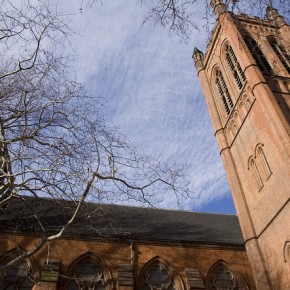 Delivered at the General Theological Seminary on November 12, 2013, 6 pm Eucharist. Lesser feast day of Charles Simeon.
Readings: Romans 10:8b-17, John 21:15-17
No audio.
*****
November ‚Äì November is an event – at least here in New York. Fall just sort of happens; the trees turn gold, red, or a really tired brown. The first snow fall appears, we no longer know how to dress for the cold subway platforms and hot subway cars, and Christmas music becomes the soundtrack of our entire life. And if you’re a child of the internet like me, November brings even more events. There’s Movember where growing a mustache helps you raise money for charity; Facebook feeds are filled with people celebrating 30 days of thankfulness and then there’s Nanowrimo, where writers across the world commit themselves to writing a novel in just 30 days. 30 days to take the story inside of us and put it on paper. One whole month to create something brand new. 30 days, 50,000 words, the next great American novel ‚Äì and maybe, just maybe, completing one of our life’s great works.
Now, today is the feast day of Charles Simeon. His is a name that I haven’t come across before because, as a Lutheran, his day doesn’t show up in the front of my hymnal. So, when the rota first came out, I turned to the great knowledge bank that is Wikipedia to discover who he is. And as I scanned through the article, I really wondered why the Spirit was calling me to preach my senior sermon on a Vicar from Cambridge. Born in 1759, Charles grew up in the middle class. He attended Cambridge, became ordained, and served Holy Trinity Church in Cambridge for 54 years until his death. He helped pick missionaries for India, started the Church Missionary Society, help develop the idea of campus ministry, and might have even invented small group ministry while at Holy Trinity. And as I kept scanning, I noticed a word that kept popping up in his biography, over and over,: the word ‘evangelical’. So maybe that’s why I’m up here ‚Äì to talk about that word in this place ‚Äì since that word is in my denomination’s name. I’m a member of the Evangelical Lutheran Church in America. We just celebrated our 25th birthday, and we’re a product of the last 300 years of splits and mergers of various Lutheran church bodies throughout the United States. And we purposefully grabbed onto that word “Evangelical” knowing full well that, in this modern US context, we no longer own it. But just because we don’t own it, that doesn’t mean Jesus doesn’t call us to live that word out ‚Äì to be evangelical – in everything that we do.
“The word is near you, on your lips and in your heart” – that’s how our reading from Romans starts, with words from Moses. This quote comes from Deuteronomy, in the middle of Moses’ last great sermon to the people before his death. After 40 years in the desert, on the shores of the Jordan, Moses gathered the tribes of the Exodus together to bring their experiences into a word and to draw them into the covenant that God had made with them. Moses stood before the people, and stands before us, to say that this covenant from God ‚Äì it’s no far away – it’s right here, right now, on our lips and in our hearts. That gift ‚Äì resides not buried in some place deep no, it is at the center of who we are and in what we communicate. That Word that Jesus is Lord, that forgiveness, mercy, and love happens to us, that Jesus actually matters, that’s what is on our lips, in our words, in the air that we breath in and in the air that we breath out ‚Äì in and out. And isn’t that unbelievably scary?
Because if you take up the sum of all of our parts ‚Äì everything that is a part of who we are, from the tips of our toes to the top of our heads ‚Äì I bet we could think of at least one thing that we said that probably wasn’t very Christ like. There was probably a thought or two that might, just might, have been negative of another person, judgmental, or maybe we didn’t think of the other person at all. We carry with us a history of hurt that has been done to us and that we have done to others. The breaking of relationships, the hurtful things said in anger, the joys we feel that blind us to the plight of our neighbor ‚Äì taking us as a total package just shows that we’re not perfect. Taken seriously as a whole, can I ever truly believe? Is there anything that I can do to make me right with God? In the great Nanowrimo of our lives, in the novels we write everyday in our actions, thoughts, words, and deeds ‚Äì can my heart truly believe? How faithful can I actually be?
But it’s not my faith that I’m counting on; it’s God’s faithfulness to me.
Faith is a gift. Trust is a gift. Trusting in the promises of God ‚Äì promises made at the foot of the Cross – promises made to us in our baptisms ‚Äì promises that we did not earn but that were given to us because that’s just what God does ‚Äì God has made that my story; God has made that our story. And that’s the Christ event ‚Äì the external work of God telling the entire world that God loves you, all of you, and that all of you matters. Not just the part that is good; not just the part that might have a good hair day every once in awhile; or the part that is all smiles and has no sorrows ‚Äì no, all of us matters. We, as total packages, matter to God. Christ died and lives for us. And we die and live in Christ. Our relationship to God doesn’t depend on us ‚Äì our relationship to God depends on God’s faithfulness, God’s promises, God’s gifts ‚Äì gifts that are given every day, to feed and nourish us, to help us be little Christ’s to our friends and neighbors. And to give fully, to love completely, to listen and see all who are unseen. We are called to boldly go and live out the Christ event everyday, not because we are perfect; not because, as seminarians or professors, priests or pastors, Episcopalians or Lutherans, that we just know more ‚Äì we live out the Christ event because the Christ event has been given to each of us first. Because God has claimed us; and in that claiming walks with us, fully, and completely. That’s our story; that’s the story that God writes in our hearts and on our lips; that’s the story that we are called to proclaim, to confess – we’re called to fill the air around us with God’s love, God’s faithfulness, Christ’s story, and our story too.
And Charles Simeon ‚Äì I think he got that ‚Äì because that’s the heart of being an Evangelical ‚Äì proclaiming and confessing the story of Jesus Christ. Being evangelical isn’t a worship style, political party, or a social contract. No, it is proclaiming God’s love for me, for you, and for the whole world. The telling of God’s story, that was Charles Simeon’s claim to fame. During his years of preaching, he wrote and published what he called “Sermon Skeletons” – outlines of sermons that were spread all throughout England. And these sermon outlines became his commentary on the bible. That’s how he saw the text ‚Äì a story not only to be read but to be proclaimed. By the time he died, his sermon skeletons covered most of the bible and filled 21 volumes. It’s still in print today. Pastors and priests continue to reflect on his words ‚Äì and on his proclaiming and confessing of Christ’s story because that was his story; because God made that his story; and because God continues to make that our story too. God has claimed us all as evangelicals ‚Äì we are called to be the feet that brings good news into new places so that in all that we do, in all that we say, in the novels that we write and live out everyday, we know that the Word is near ‚Äì the Word is on our lips ‚Äì the Word is in our hearts ‚Äì and Christ is with us. Amen.

Links for November 22, 2013

The Sunday of Doom But he just learned that the Church of Sweden never followed the suggestion of Pope Pius XI, in 1925, and instituted the feast of Christ the King. Instead, since 1921 the Swedes have called the final Sunday of the church year Domssoendagen, or “The Sunday of Doom.” | November 21, 2013 | Magdalene’s Egg
An Armored Hoodie | I am Knight
This is How We Die Now Every year, premature death ‚Äî that is, death attributable to causes other than old age ‚Äî deprives people of a combined 1.7 billion years of life they could have enjoyed. 1.7 billion years. Think of everything those people could have done ‚Äî the children they could have had, the jobs they could have done, the people they could have loved, the things they could have created that now won’t be. | November 20, 2013 | Washington Post via The Big Picture
Which charts to bring up when someone says we have a spending problem, not a revenue problem. | November 10, 2013 | The Big Picture
What a wild picture of the sun | November 19, 2013 | io9
For the bottom 90%, income in 2012 dropped by 10.7% compared to 2002. | November 11, 2013 | WSJ via The Big Picture

My speech at the ELCA Churchwide Assembly
 With the ELCA capital campaign finally kicking off (maybe), I probably should share my two minute speech before the 2013 Churchwide Assembly.
********
My name is Marc Almendarez Stutzel from the Metropolitan New York Synod, a seminarian, and I am completing my internship at Advent Lutheran Church in Manhattan. I am also the co-author of this amendment.
As a young adult who started his 20s as one of the self-identified NONEs, and as one who was invited, welcomed, formed, and loved by a small church that had barely a handful of adults in their 20s and 30s, I am a living witness to the powerful & inclusive welcome that our amazing church has.
This amendment to the capital campaign is about continuing this welcome to all youth and young adults who are being led by the Holy Spirit to live our their faith. Lay adults and lay youth are the bulk of the church. Lay leadership is the leadership of the church. This capital campaign amendment is a challenge to all of us to try new things, experiment, risk failure, and to believe that young adults and youth, empowered by the Holy Spirit, should be shepherded by the entire Churchwide expression.
When a church calls a young adult to be its council president, when a young adult feels called to start a mentorship program where the young shepherded the shut-ins, and when a youth feels moved to combat bullying in their school, wouldn’t it be awesome if the Churchwide expression saw them, heard them, and had a network of committed peers that the young person didn’t have to seek out but a network that sought them out.
I pray that we can be a church where no young person would need to ask “are you with us?”
Whether the capital campaign is approved or not, this amendment serves as a powerful witness to being a church committed to lay leadership and their faith formation, to say we are with all young people in our communities, especially those who are just outside our church doors, young people that the Spirit is calling us to see and meet.

Links for November 19, 2013

Photos: Graffiti Mecca 5 Pointz Now Painted Over White | Pictures by joshiku | November 19, 2013 | gothamist
The New Danish Royal Family Portrait is Super Creepy | November 18, 2013
Sisterhood of the Traveling Handbags. | A bag contains just as many memories as a journal. | November 18, 2013 | Man Repeller
Kmart’s new Joe Boxer ad | It seems a few people aren’t thrilled with it. I personally think they are going for the Lutheran demographic. Who else wants to see a bell choir? | November 18, 2013 | Huffington Post
How the Media would have covered the Gettysburg Address | November 19, 2013 | NY Mag
The Hedge Knight: The Graphic Novel | Game of Thrones, 100 years before. November 8, 2013 | io9
Personal Finance for Engineers (at Twitter) | November 10, 2013 | The Big Picture

Hey, I know that guy! From the Paddock Lectures, 2 weeks ago
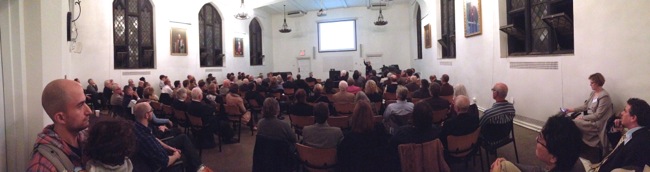
O only made it half-way through the first lecture. It was past his bed-time.

The ELCA has a brand new bag
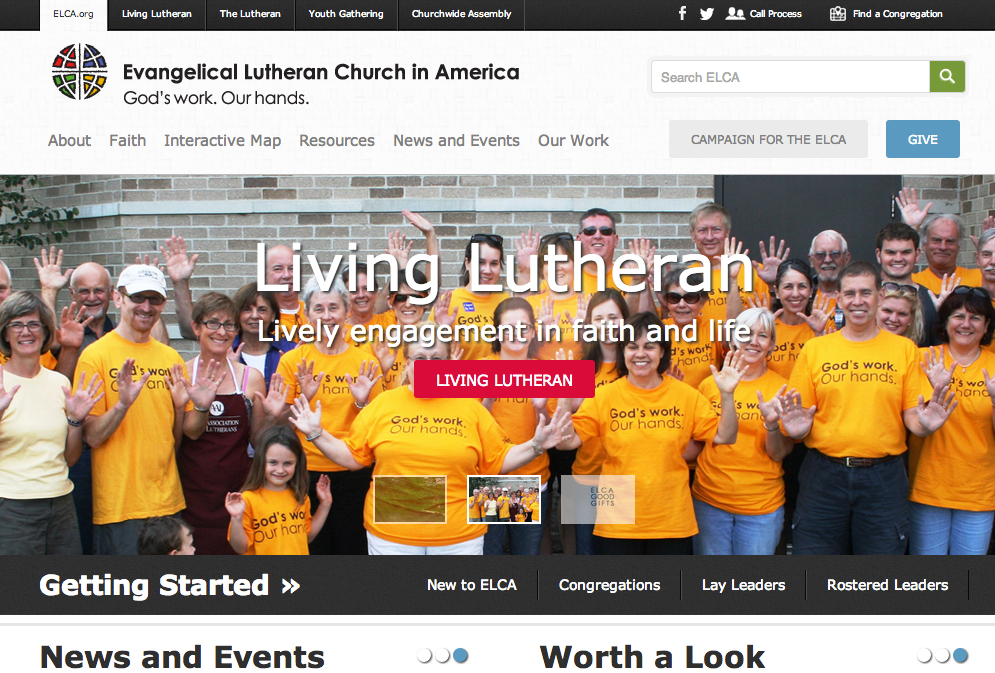
The ELCA has a brand new look.
I haven’t dug enough into the new site to give a complete review but, at first glance, I like what I see. The website is fully responsive and seems designed from the smartphone, out. This is brilliant. The front page feels great on a smartphone, easy to navigate, intuitive, and the menu works perfectly (its large size is perfect for fat thumb syndrome and synchs well with other menus that look like it). This mobile site blows my most recent attempt at responsive design out of the water and, for that, I’m grateful. Well done!
Of course, the website itself is still too heavy. There is too much information on it and it is trying to do too much. This has been a problem for elca.org forever. The website is seen as a one-stop-shop for all denominational and visitor needs. I doubt any non-ELCA Lutheran will look at that site and be encouraged to dig deep within it. The desktop experience just is too bloated to cater to the brand new visitor. There are too many menus, too many sliding pictures, too many places to click, and too many different page templates. The interior pages, surprisingly, are not terrible but their experience on the big screen is lacking. The content in the center is not the focus of the experience. On a small screen (or smartphone), that center content would really pop. But, on a big screen, it is trapped by content around it. And the deeper you get into the site, the less intuitive the menu choices become. It is easy to get lost in the site and not know why that happened. There’s just too much here – and just not enough of the right stuff.
All in all, this isn’t a bad attempt but I’ll hold off on my final judgement until I see how the new call process/assignment/clergy-paper-work section looks after December 9. As an almost-clergy person (God willing), these new web-forms are what I’m really looking forward to seeing and exploring.